
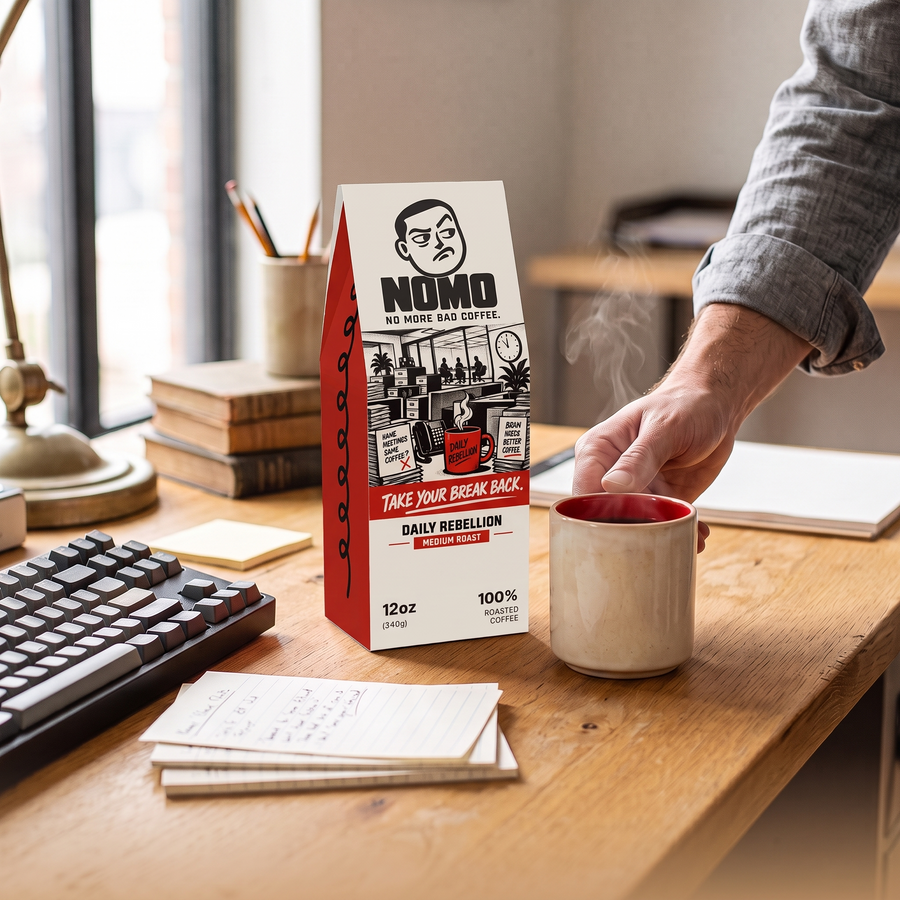

Roast level is the biggest single factor in how a coffee tastes. The same green beans can taste bright and fruity or deep and chocolatey depending on how long and how hot they're roasted. Here's a simple guide to picking yours.
Light roast: bright and fruity
Light roasts are taken off the heat around the "first crack," when the beans audibly pop. They keep more of the bean's original character: higher acidity, lighter body and flavors like citrus, berries and florals. Great for pour-over and for anyone who likes a lively cup.
Try: Light Roast (citrus and fresh fruit) or our single-origin Colombia (cherry, grape and plum).
Medium roast: balanced and sweet
Medium roasts go a bit longer. Acidity softens, sweetness and body build, and you get notes like caramel, nuts and milk chocolate. It's the crowd-pleaser — the roast most people mean when they say "a good cup of coffee."
Try: Medium Roast, House Blend or Smooth Blend.
Dark roast: bold and deep
Dark roasts go toward or into the "second crack." Roasty, bittersweet flavors take over — dark chocolate, caramelized sugar, toast — with a heavier body and low acidity. They stand up well to milk and are classic in a French press.
Try: Dark Roast, French Roast or the medium-dark Overtime Blend.
Does dark roast have more caffeine?
Not really. Bean for bean, caffeine barely changes during roasting. The differences you hear about come from how you measure: dark-roasted beans lose more mass and get less dense, so a scoop of dark roast holds slightly fewer beans than a scoop of light. If you weigh your coffee, the caffeine is roughly the same. Pick your roast for flavor, not for a buzz.
Quick cheat sheet
- You drink it black and like bright flavors → light.
- You want an easy everyday cup → medium.
- You add milk or love bold, bittersweet coffee → dark.
- You want flavor without the late-night jitters → Decaf.
Still torn? Every roast comes whole bean or ground, roasted to order. See all nine in the coffee lineup — buy 3 bags and save 15%.