

Short answer: no, decaf is not completely caffeine-free — but it has very little. If you love the taste of coffee but not the 3 a.m. ceiling-staring, decaf is your friend. Here's what you should know.
How much caffeine is in decaf?
In the US, coffee labeled decaffeinated has had the vast majority of its caffeine removed — industry standards target about 97% or more. That typically leaves somewhere around 2 to 15 mg of caffeine in an 8 oz cup, depending on the beans and how it's brewed. A regular cup of coffee usually has roughly 80 to 100 mg or more. So decaf has a small fraction of the caffeine, but not zero.
If you've been told to avoid caffeine completely for medical reasons, check with your doctor before drinking decaf.
How is coffee decaffeinated?
Caffeine is removed from the green (unroasted) beans before they're roasted. Common methods use water, carbon dioxide or a solvent to draw the caffeine out, and the beans are then dried and roasted like any other coffee. Because the process happens before roasting, a well-made decaf can keep much of the bean's flavor.
Why does some decaf taste flat?
Often it's not the decaffeination — it's age. Decaf tends to sell slower, so it sits on shelves longer and goes stale. Fresh, roasted-to-order decaf tastes a lot closer to regular coffee.
When decaf makes sense
- Your afternoon or evening cup, so you can still sleep.
- A second or third cup when you want the ritual, not the jolt.
- If you're cutting back on caffeine but don't want to give up coffee.
Our decaf
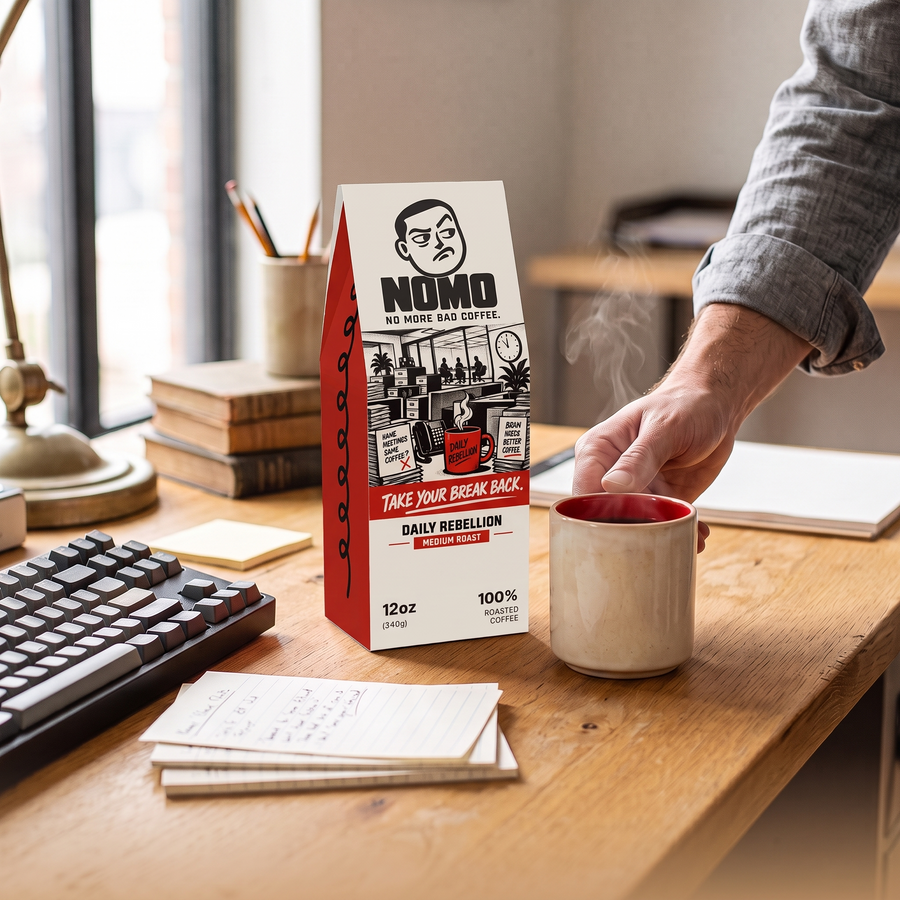
NOMO Decaf is a smooth medium roast from Indonesia with earthy, herbal and dark chocolate notes, full body and low acidity. It's roasted to order and comes whole bean or ground. Clock out. Keep the coffee.
Mixing it up? Pair it with a daytime roast from the coffee lineup — buy 2 bags and save 10%, or 3 and save 15%.